
Why Your Business Needs a Mobile App in 2026: The Case Is Stronger Than You Think
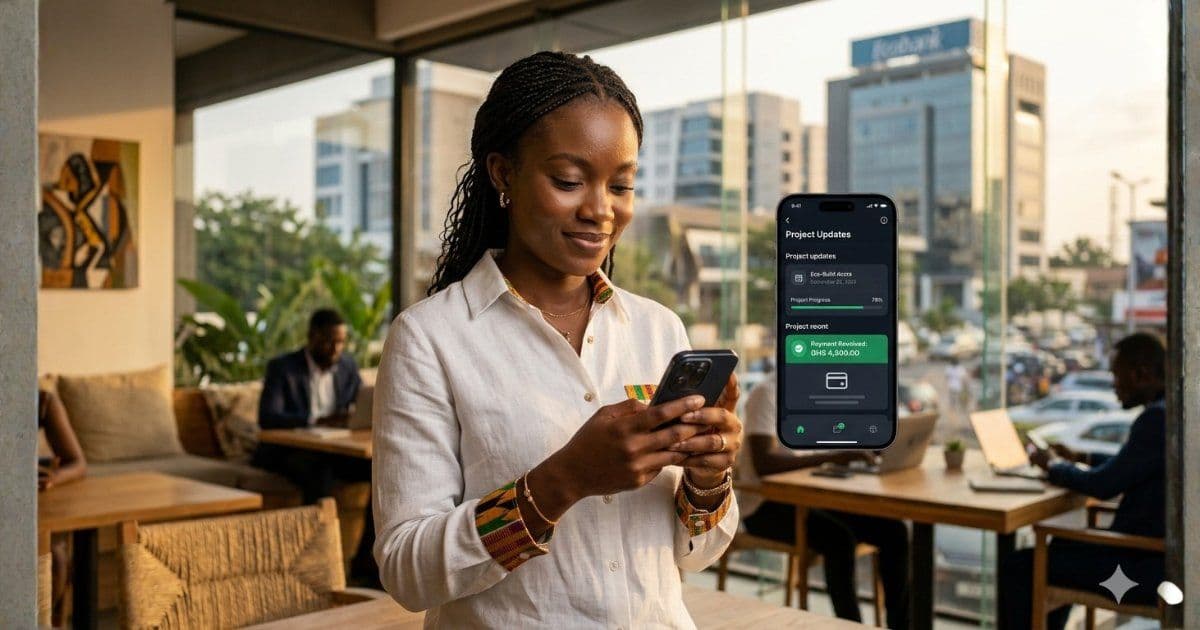
Your customers are already on their phones. Right now. Research consistently shows that adults spend an average of 4–5 hours per day on their smartphones — and the vast majority of that time is spent inside apps, not browsers. The smartphone has become the primary computing device for billions of people worldwide, and for many markets in Africa and Asia, it is the only computing device.
This shift is not happening uniformly. It is happening fastest in mobile-first markets: sub-Saharan Africa, South and Southeast Asia, Latin America. In Ghana specifically, the combination of high smartphone penetration, a mature mobile money ecosystem — MTN Mobile Money, Vodafone Cash, AirtelTigo Money — and a young, digitally native population has created one of the most compelling mobile commerce environments in the world.
Whatever market your business operates in, the data points in the same direction: if you want to reach, retain, and transact with your customers where they actually spend their time, a dedicated mobile app is no longer a competitive differentiator. It is increasingly the baseline.
The Mobile Economy: What the Numbers Show
- 90% of all mobile screen time is spent inside apps, with just 10% in mobile browsers, according to data.ai's State of Mobile 2025 report.
- 85% of consumers prefer native apps over mobile websites, citing speed, usability, and personalisation, per research compiled by Think With Google.
- Mobile commerce is growing faster in Africa than any other global region, with sub-Saharan Africa showing particularly strong trajectory, according to the GSMA Mobile Economy Africa report.
- Push notifications increase app engagement by an average of 88%, according to research published by Localytics.
- Mobile app users typically generate higher average order values and repeat purchase rates than website visitors, according to Criteo's Commerce and App Report.
In the Ghanaian context, there is an additional factor that makes mobile apps particularly powerful: the mobile money ecosystem. MTN Mobile Money alone processes billions of cedis in monthly transactions. A mobile app that integrates seamlessly with the payment infrastructure Ghanaians already trust — and use daily — removes the single biggest friction point in any digital transaction.
What the Industry's Leading Voices Say
"Mobile is not the future; it is the now. Meet your customers in the environment of their choice, not where it is convenient for you." — Cyndie Shaffstall, author and marketing technology strategist
"Apps are the new storefronts. If you do not have a presence in the app economy, you are invisible to the fastest-growing consumer segment." — Mary Meeker, former partner at Kleiner Perkins and author of the authoritative Internet Trends Report
6 Business Benefits That Justify the Investment
- A communication channel you own: Social media platforms can reduce your reach overnight with an algorithm change. WhatsApp Business policies can restrict bulk messaging. A mobile app with push notifications gives you a direct, unrestricted line to your customers — no intermediary, no platform risk.
- Personalisation that drives retention: Apps collect and apply behavioural data to serve each user what is relevant to them, based on their history and preferences. This level of personalisation is architecturally impossible on a website and creates meaningfully stronger loyalty.
- Offline functionality: Apps can cache critical data and function without an internet connection. In a market where connectivity quality varies significantly, this is not a luxury feature — it is a genuine user experience differentiator.
- Friction removal: Every step removed from a transaction or process increases completion rates. A mobile app eliminates the friction of finding a website, logging in through a browser, and navigating a non-optimised interface. Faster = more conversions.
- Loyalty and repeat business mechanics: In-app loyalty programmes, order history, personalised promotions, and reorder functionality — these tools systematically increase the lifetime value of every customer.
- Operational efficiency for your team: A well-designed mobile app does not just serve customers — it can serve your staff. Field teams with digital job management, route information, and real-time updates operate significantly more efficiently than those working with paper-based or phone-based processes.
The Types of Business Apps That Deliver Measurable Returns
- Client portal apps: Allow clients to track project progress, view and approve invoices, send messages, and manage their account — eliminating the volume of manual status-update calls and WhatsApp messages that consume staff time.
- Service booking apps: Automated scheduling, reminder notifications, and capacity management — particularly effective for healthcare, hospitality, professional services, and any appointment-based business.
- E-commerce apps: Higher average order values, easier repeat purchases, and better product discovery than mobile websites — especially when integrated with mobile money payment.
- Delivery and logistics apps: Real-time tracking and status updates for customers, combined with route optimisation and job management for delivery teams.
- Field service apps: Job sheets, time tracking, photo capture, and digital sign-off for businesses with teams working across multiple locations.
The Right Question
The question is not whether a mobile app would benefit your business. For most businesses with recurring customer relationships, the answer to that question is clearly yes. The real question is: what is the cost of not having one, expressed in lost efficiency, missed opportunities, and competitive disadvantage that compounds each year your competitors have one and you do not?
At Abefo360, we build cross-platform mobile applications using Flutter — a technology that delivers native-quality apps for both iOS and Android from a single codebase. This approach means faster development, lower cost, and a consistent premium experience across all devices.
Speak to our team about what a mobile app would look like for your specific business. We will scope it honestly — including what it costs and what it realistically delivers.